Publications
Our faculty, staff, and students publish regularly. These books, essays, and articles in the field of digital history were published by scholars affiliated with RRCHNM.
2026
2025

Republic of Tweets
Unpacking the History of Higher Education in the United States
2024
Constructing and Contesting the Past: Teaching in the Age of Wikipedia
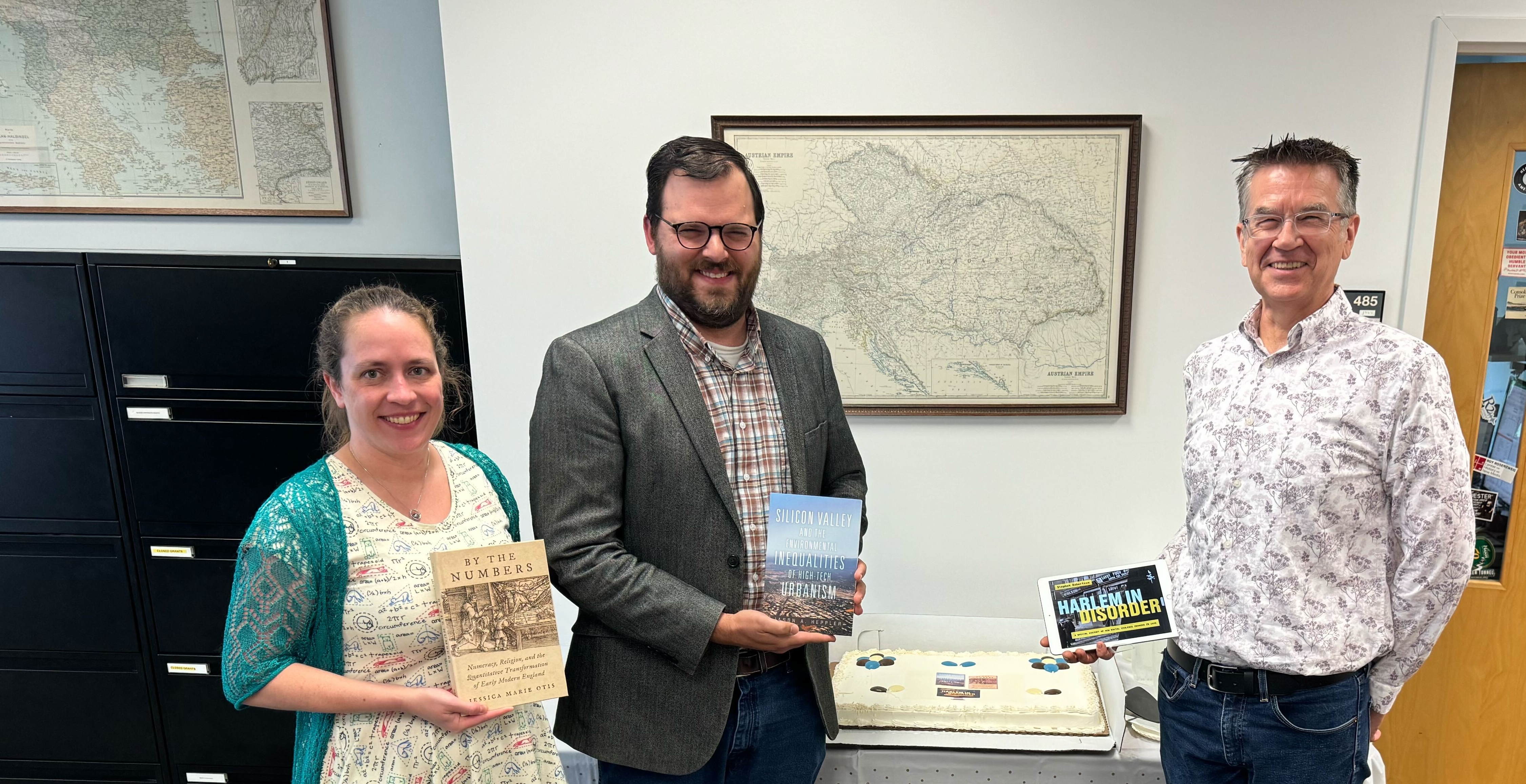
Harlem in Disorder: A Spatial History of How Racial Violence Changed in 1935
Teaching Digital Humanities Online: George Mason University’s Graduate Certificate in Digital Public Humanities
2023
‘Follow the Money?’ Funding and Digital Sustainability
America’s Public Bible: A Commentary
Menocchio Mapped: Italian Microhistory and the Digital Spatial Turn

Reframing the Conversation: Digital Humanists, Disabilities, and Accessibility
Scale and Narrative: Conceiving a Long-Form Digital Argument for Data-Driven Microhistory
2022
A Silver Lining: Teaching through the Covid-19 Pandemic

Creating Capacity for Research Data Services at Regional Universities: A Case Study
Digital Scholarship and Teaching
Hidden Voices: A Case Study Analysis of Subject Headings for Book Titles on Women in Science
Introduction: Renaissance Italy and the Digital Humanities
The Properties of Digital History

What’s In a Name? Six Degrees of Francis Bacon and Named-Entity Recognition
2021
Arguing with Digital History: Patterns of Historical Interpretation

Navigating through Narrative
The Making of America’s Public Bible: Computational Text Analysis in Religious History
2020

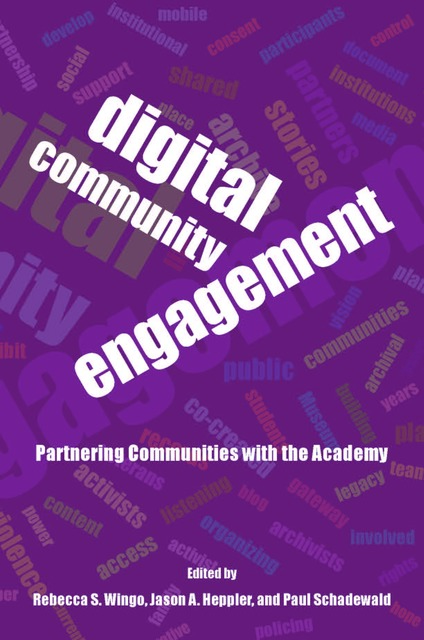
Digital Community Engagement: Partnering Communities with the Academy
This co-edited volume brings together scholars and practitioners to examine how digital tools and methods can foster meaningful partnerships between academic institutions and the communities they serve.
Digits: Two Reports on New Units of Scholarly Publication
2019
A Braided Narrative for Digital History
Digital Humanities
Reflective of my best work: Promoting inquiry-based learning in a hybrid graduate history course
Teaching Hidden History: A Case Study of Dialogic Scaffolding in a Hybrid Graduate Course
2018
Packaging Data Analytical Work Reproducibly using R (and Friends)
Teaching Hidden History: Student Outcomes from a Distributed, Collaborative, Hybrid History Course
The Spine of American Law: Digital Text Analysis and U.S. Legal Practice
2017
Digital History and Argument
A white paper from the Arguing with Digital History working group examining how digital historians make, support, and contest arguments using digital tools and methods.
Helping Students Make History: Community Engaged Learning
Bibles and Tracts in Print Culture and Digital Culture
2016
A Servile Copy: Text Reuse and Medium Data in American Civil Procedure
Digital Mapping as a Research Tool: Digital Harlem: Everyday Life, 1915-1930
Searching for Anglo-American Digital Legal History
The Differences Between Digital History and Digital Humanities
2015
Scholars as Students: Introductory Digital History Training for Mid-Career Historians
Jane, John … Leslie? A Historical Method for Algorithmic Gender Prediction
What the Teacup Said to the Tartan: Students Reveal the Historical Narratives Hidden in Everyday Objects
2014
Using Metadata and Maps to Teach the History of Religion
2009
Why Collecting History Online is Web 1.5
2008
An Introduction to U.S. History Research Online
An Introduction to World History Research Online
2007
Entering the Virtual World of Underwater Archaeology
2006
Sending Your Courses into the Blogosphere: An Introduction for “Old People”
The Role of Technology in World History Teaching
Ways of Seeing: Evidence and Learning in the History Classroom
Can History be Open Source? Wikipedia and the Future of the Past
Evolution, Intelligent Design, Climate Change, and the Scholarly Ecosystem
From Babel to Knowledge: Data Mining Large Digital Collections
No Computer Left Behind
2005
The Future of Preserving the Past
Web of lies? Historical knowledge on the Internet
By the Book: Assessing the Place of Textbooks in U.S. Survey Courses
Digital Archives Are a Gift of Wisdom to Be Used Wisely
American Digital History
The Bookless Future: What the Internet is Doing to Scholarship
Should Historical Scholarship Be Free?
2004
Using Technology, Making History: A Collaborative Experiment in Interdisciplinary Teaching and Scholarship
History and the Second Decade of the Web
More than ten years of experience with the web has allowed us to understand what the medium does well and what it does poorly, and how we may improve online historical efforts so they capitalize on the web's strengths while avoiding its weaknesses. This essay explores three possible ways to advance digital history: interaction between historians and their subjects, interoperation of dispersed historical archives, and the analysis of online resources using computationalmethods. Thinking about such possibilities raises important, age-old questions about how we should preserve and chronicle the past.
Gutenberg-e: Electronic Entry to the Historical Professoriate
History and the Web, From the Illustrated Newspaper to Cyberspace: Visual Technologies and Interaction in the Nineteenth and Twenty-First Centuries
2003
‘Scholars will soon be instructed through the eye’: E-Supplements and the Teaching of U.S. History
Presented online in association with the History Cooperative. http://www.historycooperative.org
http://www.historycooperative.org/journals/jah/89.4/jaffee.html